Most people who buy a diffuser make the same two mistakes in the first week. They add extra oil because they assume a stronger scent must be better, or they leave it running for hours in case it "stops working" when switched off. Both usually end the same way: a room that smells overpowering, a tank that clogs faster than it should, and a diffuser that ends up in a drawer a month later.
Using a diffuser well is simple once you know what the device is actually doing. It also matters a bit more in Kuwait than in cooler, open-window climates, because the AC runs most of the year and rooms stay closed for long stretches. This guide explains how the main types of diffuser work, then goes step by step through setting one up, placing it and keeping it clean.
How does a diffuser work? The main types
Almost every diffuser sold for homes uses one of a few methods. The method changes how strong the scent is, how far it travels and how much looking after the diffuser needs.
| Type | How it works | Good to know |
|---|---|---|
| Ultrasonic (water-based) | A small disc vibrates at very high frequency in a water-and-oil mix, turning it into a fine, cool mist that a small fan pushes out. | Quiet, often has an LED light. Adds a little moisture to the air. The tank needs regular rinsing. |
| Waterless (nebulising) | Air is forced through the oil itself, breaking it into tiny particles. No water is involved, so the oil isn't diluted. | Stronger, more consistent scent. Suits larger rooms and the majlis. Uses oil rather than water, so no daily refilling. |
| Evaporative | A fan blows air across a pad or wick soaked in oil. | Simple and cheap, but the scent is fainter and fades faster. Pads need replacing. |
| Burners and bakhoor burners | Heat warms oil or bakhoor, from a tealight or an electric plate. | Traditional scent. Tealight burners have an open flame and should never be left unattended. |
With an ultrasonic diffuser, the vibration doesn't heat the water. It shakes it hard enough to break it into a cool mist rather than steam. A waterless diffuser skips the water completely, which is why a small amount of oil gives a noticeably stronger scent.
What makes a diffuser "smart"?
A "smart" diffuser doesn't have a different misting method. The difference is how you control it: an app (Bluetooth or WiFi), schedules, adjustable intensity and sometimes lighting. Smart features are about convenience. You can set the diffuser to run for a few minutes each hour while you're home instead of switching it on and off by hand. For example, the Smart Aroma Diffuser 150 ml (11.950 KD, for rooms of about 30–50 m²) lets you set run times and intensity from your phone.
Step by step: how to use an essential oil diffuser
Water-based (ultrasonic) diffusers
- Unplug it and place it on a flat, stable surface before you fill it.
- Fill with water to the marked line. Don't guess: too little and the mist stops early, too much can overflow into the base.
- Add a few drops of oil, as your model's instructions say. Doubling the oil doesn't double the scent. It mostly uses up the bottle faster.
- Close the lid, plug in and choose intermittent mode if your model has one. Most rooms only need 30–60 minutes at a time.
- Empty and rinse the tank when you finish, and always between different oils, so residue doesn't build up on the disc or mix scents.
Waterless diffusers
- Fill the oil bottle or reservoir with an oil made for diffusers, without overfilling, and screw it in firmly.
- Start with a low setting. On app-controlled models you set how long it sprays and how long it pauses. A short spray and a long pause is a good starting point, then adjust.
- Set a schedule so it runs when you're home and stops when you're not.
- Wipe the outlet when you change scents so they don't mix.
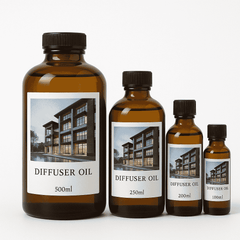
The Smart Scent Aroma Diffuser 200 ml (23.500 KD) is a waterless model for bedrooms, living areas and offices. For refills, our diffuser oils come in 100, 200 and 500 ml bottles, from 2.500 KD.
How tank size and settings affect how long it lasts
The type of diffuser decides how the scent is made. Tank size and settings decide how long it lasts. A small tank on a high or continuous setting runs dry much sooner than the same tank on a low or intermittent setting, and a bigger reservoir simply lasts longer between refills.
Intensity settings change how much mist is released, not how concentrated the oil is. A higher setting fills the room faster and uses oil faster. A lower setting stretches the same fill further but takes longer to notice. Neither is "better". Match it to the room size and how long you want it running.
Why diffusers behave differently in Kuwait homes

- AC moves air a lot. A diffuser right next to a vent loses its scent before it builds up. Keep it at least a metre from vents and ceiling fans.
- Rooms stay closed. In a sealed room, scent builds up faster than you'd expect, so shorter or intermittent sessions work better than continuous ones. In the hottest months you'll often need less running time. In cooler months, with doors and windows open more, you may need a little more.
- Dry indoor air. Evaporative pads dry out faster, so refills don't last as long. Water-based diffusers add a little moisture as a side effect. Waterless diffusers don't depend on the water level at all.
- Dust. Homes near busy roads or construction get more fine dust indoors. Wipe the outlet, pad or vent area every couple of weeks to keep the diffuser working consistently.
Where to place your diffuser
- Majlis and living room: a central table or console at about waist to chest height, away from direct AC airflow.
- Bedroom: a shelf or dresser a little way from the bed, on a low setting with a timer.
- Kitchen and bathroom: cooking smells and humidity compete with the scent, so a waterless diffuser usually works better than a water-based one here.
- Never inside a closed cabinet. The mist needs open air, and trapped moisture can damage the electronics.
For room-by-room advice on size and placement, see our guide to choosing the best aroma diffuser for your home.
Common mistakes to avoid
- Too much oil: makes the scent overpowering and clogs the disc or outlet faster.
- Running it for days nonstop: most home units aren't built for that, and you stop noticing the scent anyway.
- Skipping the rinse between oils: residue builds up and scents mix.
- Mixing random oils: blends made to go together work. Random combinations often don't.
- Assuming a stronger fan means a stronger scent: the fan affects how far mist travels. The oil and the diffuser type decide the strength.
- Treating it as an air purifier or humidifier: a diffuser spreads scent. It doesn't filter the air, and the moisture from an ultrasonic model is small compared with a real humidifier.
Is it safe to run a diffuser every day?
For most homes, yes, when it's used as directed: the right amount of oil, sessions rather than nonstop running, and a room that isn't completely sealed. Homes with young children or pets should take a few extra precautions, which we cover in are essential oil diffusers safe for homes.
Choosing your diffuser

Using a diffuser well comes down to a few habits: the right amount of oil, a stable open spot, sessions measured in minutes rather than hours, and a quick clean between oils. Once those are in place, pick the type that fits your room. You can compare app-controlled and waterless models in our scent diffuser collection, or visit our showroom at Shuwaikh Plaza, Khalifa Al-Jassim Street, Shuwaikh Industrial, to smell the oils in person. We deliver across Kuwait, with cash on delivery, card or Deema instalments. Not sure which one suits your room? Contact us.
Frequently asked questions
How much oil should I put in a diffuser?
For a water-based diffuser, a few drops per tank as the instructions say. For a waterless diffuser, fill the reservoir to its line and control the strength with the spray and pause settings, not with more oil.
Can I use tap water in an ultrasonic diffuser?
You can, but minerals in tap water build up on the disc over time. Filtered water and regular rinsing help keep the mist strong.
Does a smart diffuser work differently from a regular one?
Not in how it makes the mist. "Smart" means app control, schedules and adjustable intensity.
Why does my diffuser make less mist than before?
It's usually residue on the disc or outlet, old or thick oil, or the wrong water level, and rarely a broken unit. Clean it and check those first.